Yooo, remember Meta's new Muse AI that's supposed to actually get things DONE for you?
Well... apparently sometimes there might be an actual human helping behind the scenes. ?
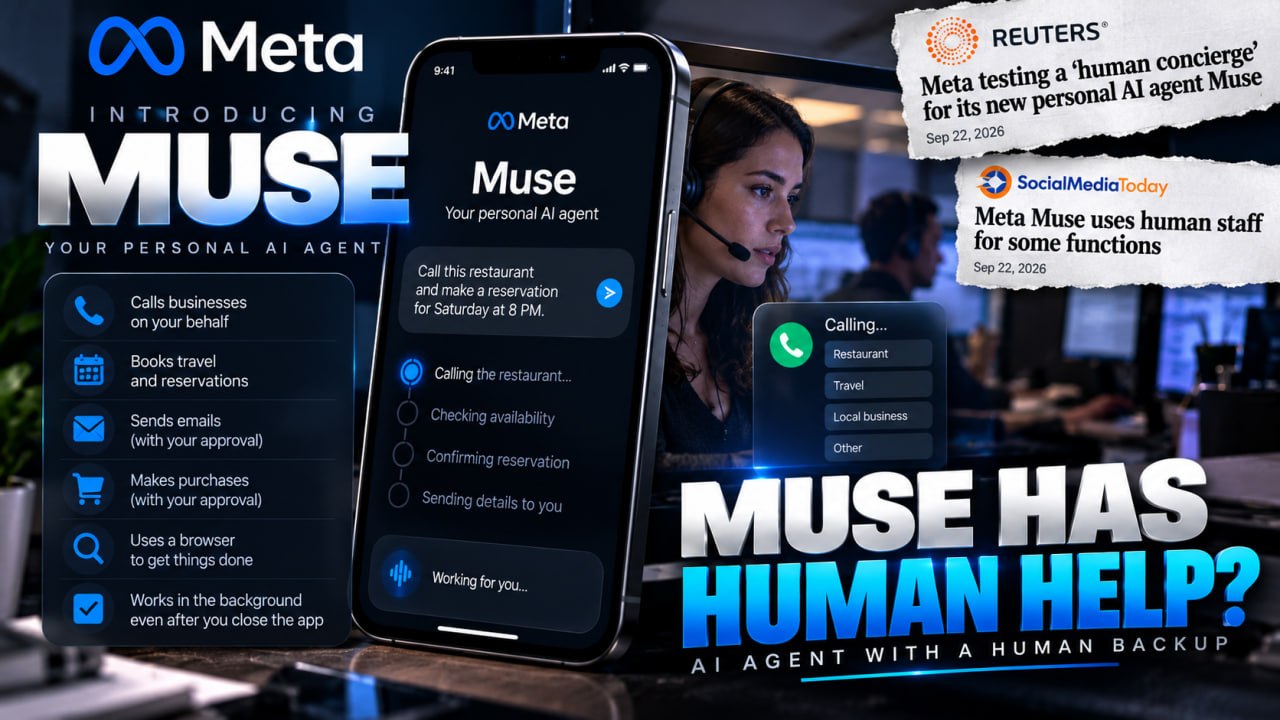
Meta is testing something internally called a “human concierge” for Muse, according to Reuters.
SO WHAT DOES THAT ACTUALLY MEAN?
Muse can make phone calls on your behalf.
You could have it call a business to check prices, ask questions, make a booking or handle another errand instead of calling yourself.
But during Meta's testing, some of those calls can reportedly be handed over to trained human contractors instead of being handled entirely by AI.
So when you tell Muse:
“Call this business and find this out for me.”
The person on the other end might actually be talking to a human working on Muse's behalf.
THAT DOESN'T MEAN MUSE IS FAKE AI
Muse itself is still an AI agent.
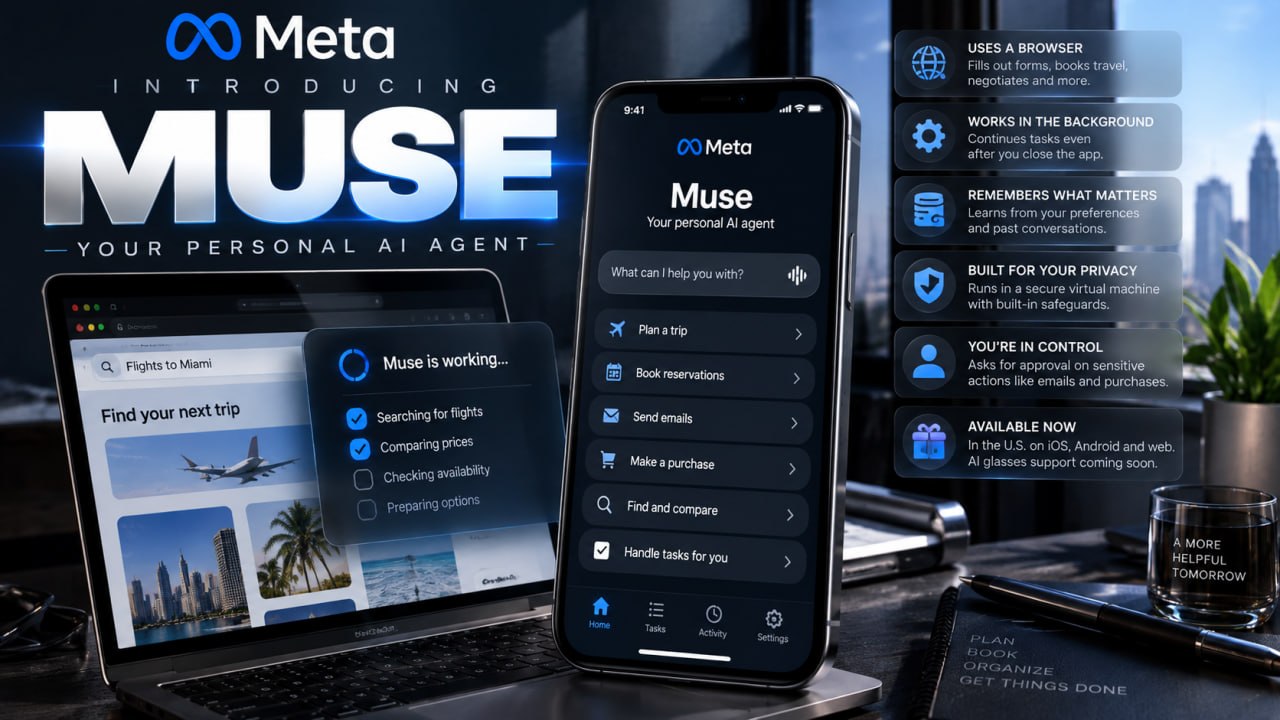
Meta says it can use a browser, fill out forms, book travel, send emails with approval, shop and continue working on longer tasks after you close the app.
The human concierge is specifically an experiment Meta is using around some of Muse's phone-calling functions.
And honestly, I can understand WHY they'd test it.
AI making real-world phone calls can run into situations it doesn't understand.
A human can step in, handle the conversation correctly and keep the task moving.
BUT NOW WE GOTTA TALK ABOUT PRIVACY
This is where things get interesting.
Reuters reports that some Meta employees raised concerns that information people expected to share with an AI could potentially be exposed to human contractors.
That's especially important because Meta heavily promoted Muse around privacy and security when it launched.
Meta told Reuters that the test is being used to gather feedback and learn how to make the calling experience safer and more private before a broader release.
Employees participating in the internal test can also opt out of the human concierge feature.
AND META HAS ACTUALLY TRIED THIS BEFORE
Social Media Today points out that Meta's old M assistant used a similar AI-plus-human approach years ago.
Humans could step in when the AI couldn't complete something.
Meta eventually shut M down in 2018, and having humans involved obviously makes an AI service harder and more expensive to scale.
But AI is WAY more advanced now.
So maybe humans aren't supposed to permanently run Muse.
Maybe they're helping Meta bridge the gap while the AI learns how to handle more real-world situations itself.
That's the part I'm watching.
Because we're entering this new era where AI isn't just answering questions anymore.
It's calling businesses.
Making reservations.
Buying things.
Negotiating.
And actually interacting with the real world for us.
If humans are occasionally helping these agents do that, users should know exactly when they're dealing with AI and when another human could be involved.
That's where this story gets bigger than Muse.
Source: Reuters — Meta Testing a Human Concierge for Muse
Source: Social Media Today — Meta Muse Uses Human Staff for Some Functions
Source: Meta — Introducing Muse
— King Coop
Content & Social Media Manager